



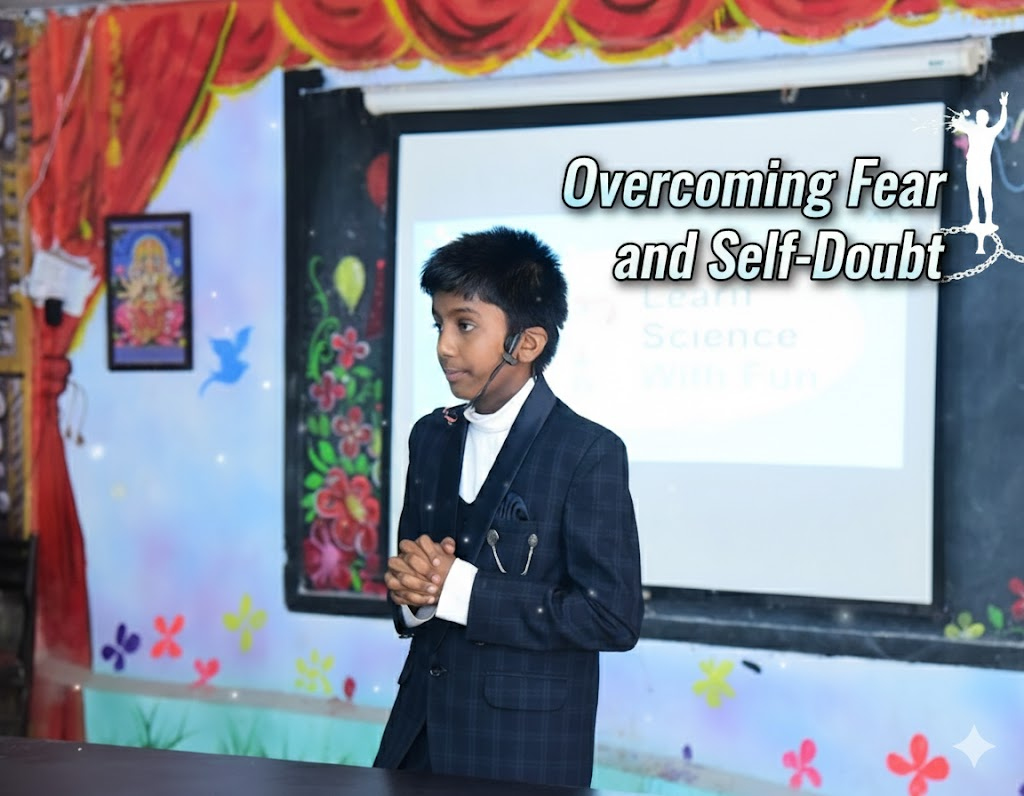
Overcoming Fear and Self-Doubt is often the first real step a child takes toward building confidence and improving focus in everyday life. When fear reduces and self-belief grows, children begin to trust their abilities, think clearly, and handle challenges with calm effort instead of hesitation.
Children naturally face fear and uncertainty while growing. Fear of failure, fear of being judged, or fear of making mistakes can quietly affect how they think and act. When these feelings remain unaddressed, they limit concentration and weaken confidence. Guidance, understanding, and the right environment help children move past these mental blocks and discover their inner strength.
At jainamjain, the focus stays on value-based growth, clarity of thought, and steady emotional development. This approach supports children in building confidence from within rather than depending on constant validation from outside.
Table of Contents
Overcoming Fear and Self-Doubt and Its Impact on Young Minds
When fear and self-doubt control a child’s thoughts, attention scatters. The mind stays busy worrying instead of learning. Once these barriers are reduced, mental space opens up. Children become more present, attentive, and willing to engage with tasks fully.
Confidence improves because children begin to believe their effort matters. Focus improves because the mind is no longer distracted by fear of failure. This combination creates emotional stability and helps children stay consistent in learning and personal growth.
A child role model overcoming challenges shows young minds that fear does not disappear instantly, but courage grows through action. When children see relatable examples, they understand that progress is possible through patience and effort.
Why Confidence and Focus Are Connected
Confidence and focus work together. Without confidence, focus breaks easily. Without focus, confidence weakens over time. Children who doubt themselves often struggle to stay attentive because their inner voice questions every step.
By learning to trust their abilities, children focus better on the present moment. This leads to improved academic performance, better communication skills, and stronger emotional balance.
A child role model overcoming challenges teaches children that focus improves when they stop fearing mistakes and start learning from them. This mindset shift builds resilience and long-term clarity.
How Emotional Safety Builds Inner Strength
Children need emotional safety before confidence can grow. When they feel heard and understood, fear reduces naturally. Emotional safety allows children to express uncertainty without shame.
Guidance rooted in calm conversations helps children recognize their emotions and respond thoughtfully. Over time, this practice strengthens focus and self-trust.
A child role model overcoming challenges often reflects emotional safety at home or in mentorship. This environment allows growth without pressure and supports steady progress.
The Role of Guidance and Values
Children learn best through example. Values like honesty, patience, and responsibility guide behavior and decision-making. When guidance focuses on values rather than outcomes, children feel less pressure and more clarity.
Value-based mentoring, as reflected through the philosophy shared on jainamjain, helps children develop awareness and self-control. These qualities support focus and emotional strength.
A child role model overcoming challenges shows how values help overcome fear through thoughtful action and discipline.
Pro Tips to Help Children Build Confidence and Focus
- Encourage children to name their fears without judgment
Let children talk openly about what scares them so fear feels manageable, not hidden. - Focus on effort and consistency rather than quick results
Praising steady effort helps children stay motivated even when progress is slow. - Help children break tasks into small, manageable steps
Smaller steps reduce overwhelm and make success feel achievable. - Teach reflection by discussing what they learned each day
Simple daily reflection builds awareness and learning from experience. - Create simple routines that bring structure and calm
Predictable routines help children feel safe and focused. - Normalize mistakes as part of growth, not failure
Mistakes teach lessons and reduce fear of trying again. - Give age-appropriate responsibilities to build trust
Responsibility builds confidence and a sense of capability. - Reduce comparisons with others and focus on personal progress
Personal growth matters more than competing with peers. - Encourage reading and curiosity-driven learning
Reading improves focus, imagination, and independent thinking. - Celebrate improvement, not perfection
Recognizing progress builds confidence and long-term motivation.
These steps support emotional strength and help children stay focused even when challenges appear.
How Role Models Shape Confidence
Children often learn more from observation than instruction. A child role model overcoming challenges shows courage through action rather than words. This inspires children to face their own fears with patience.
Such role models demonstrate that confidence builds through daily effort, reflection, and values-based decisions. This influence strengthens focus and emotional balance over time.
FAQs
How does Overcoming Fear and Self-Doubt help children stay focused?
When fear reduces, the mind stops jumping between worries and distractions. Children become more present during learning and daily activities. Confidence helps them stay engaged without second guessing every step. Over time, this creates consistency, calm thinking, and better emotional balance.
Why do children lose confidence easily?
Children often fear judgment, mistakes, or disappointing others at a young age. When emotional support is missing, self-doubt grows quietly. Constant comparison with peers further weakens self-belief. With steady guidance and reassurance, confidence can be rebuilt gradually.
How can parents support emotional growth?
Parents can support emotional growth by listening without interrupting or correcting immediately. Calm and patient guidance helps children feel safe expressing themselves. Simple routines create stability and predictability. Encouragement builds trust in their own abilities.
What habits improve focus in children?
Daily reading helps children improve attention and imagination. Clear routines reduce confusion and mental overload. Reflection encourages awareness and responsibility for actions. Low pressure environments help children focus without fear of failure.
Can mentoring help children grow emotionally?
Mentoring offers direction without force or control. Value-based guidance helps children understand right choices clearly. Feeling supported instead of judged builds emotional security. This naturally improves confidence, focus, and decision making over time.
Conclusion
Fear and self-doubt are natural parts of growing up, but they do not have to define a child’s future. With the right guidance, emotional safety, and value-based support, children learn to trust themselves and stay focused.
Overcoming Fear and Self-Doubt builds confidence by reducing inner noise and improving attention. Through consistent habits, meaningful guidance, and examples like a child role model overcoming challenges, children develop clarity and emotional strength. Jainamjain emphasizes awareness, values, and long-term growth, helping children turn fear into focus and self-belief into action.
